
You Have a Say: Understanding Choice and Control in Your NDIS Supports
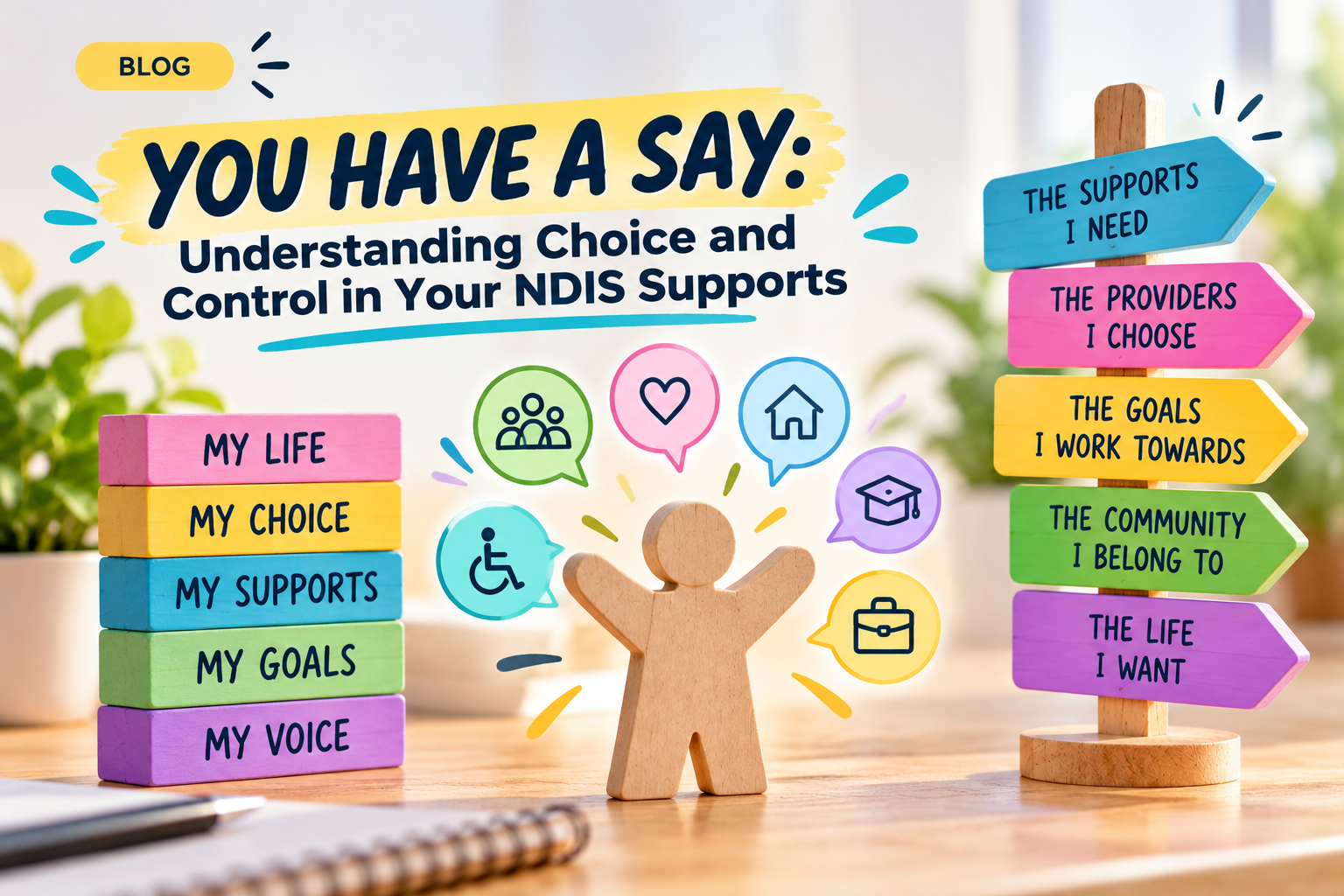
[A visual representation of choice and control in NDIS supports, showing a person at the centre surrounded by icons representing their voice, goals, support choices, community and independence, highlighting the importance of having a say and making informed decisions about your supports.]
Your NDIS supports are there to support you.
That might sound simple, but when you're working with multiple providers, Support Workers, therapists and other professionals, it can sometimes feel like there are a lot of decisions being made around you.
You might wonder:
Can I change my provider if something isn't working?
Can I say no to a support?
Can I ask questions about what I'm being charged for?
What if I don't agree with something?
Who can help me understand my options?
These are all reasonable questions.
Having choice and control doesn't mean you need to know everything about the NDIS or make every decision on your own.
It means your voice, preferences, goals and circumstances should be part of the conversation.
What Does Choice and Control Mean?
Choice and control can look different for everyone.
For one person, it might mean choosing the provider they feel most comfortable with.
For someone else, it might mean having more say in how their Support Worker provides assistance, deciding who they want involved in their support team or working towards greater independence.
It can include having a say in:
The supports you receive
The providers you work with
How your supports are delivered
The goals you're working towards
Who is involved in decisions about your support
What is and isn't working for you
What changes you would like to make.
Your circumstances are unique, so your supports should make sense for your life.
Your Supports Should Fit Into Your Life
Support is meant to help you live your life; not make your life revolve around your support.
Your goals might involve working, studying, spending time with family and friends, becoming more independent, participating in your community or managing everyday activities.
The way your supports are delivered should take those things into account.
Sometimes, even a small preference can make a big difference.
It could be the way someone communicates with you, the time of day your support is provided, the people you feel comfortable working with or the way you prefer to complete certain activities.
These details matter because good support should feel appropriate to the person receiving it.
It's Okay to Ask Questions
You don't need to be an expert to ask questions about your supports.
In fact, asking questions can help you better understand what you're receiving and make informed decisions.
You might ask:
What does this support include?
How does this support relate to my goals?
What am I being charged for?
Can you explain this invoice?
Who will be providing my support?
Can I request a different Support Worker?
What happens if I don't feel comfortable with a support?
What options do I have if something isn't working?
If something doesn't make sense, ask.
You deserve clear information about the supports you receive.
What If Something Isn't Working?
Sometimes a support that worked well in the past may no longer be the right fit.
Your circumstances can change.
Your goals can change.
Your support needs can change.
And sometimes, you simply realise that something isn't working the way you expected.
You don't have to ignore it.
A good place to start is by talking about what isn't working and what you would like to see change.
Depending on the situation, you might speak with your provider, Support Coordinator, Plan Manager, a trusted person or another member of your support team.
Speaking up early can give everyone an opportunity to understand the issue and work towards a solution.
Can You Change Providers?
Choosing a provider is an important part of having choice and control.
A provider should be able to work with you respectfully, communicate clearly and understand the supports you need.
You might consider whether:
The service is meeting your needs
You feel listened to and respected
Communication is clear
Your preferences are being considered
The agreed supports are being delivered
Your concerns are taken seriously
The service continues to be a good fit for you.
If a provider isn't meeting your needs, you can explore your options.
Changing providers can sometimes feel like a big decision, especially when you've been working with the same people for a long time.
You don't have to make that decision without support.
Choice Doesn't Mean Doing Everything Alone
Having choice and control doesn't mean you have to figure everything out by yourself.
You can ask for help.
A Support Coordinator can help you understand your options, connect with providers, coordinate different supports and communicate with members of your support team.
They can also help you work through concerns when something isn't going the way you expected.
But the important part is this:
Support Coordination should support your decision-making, not take your choices away from you.
Your goals and preferences should remain at the centre.
Your Preferences Matter
Sometimes choice and control is found in the everyday details.
You might have preferences about:
How people communicate with you
Who you feel comfortable receiving support from
Your routines
Your cultural or personal preferences
How information is explained to you
Who you want involved in conversations
What helps you feel safe and comfortable
How you like your supports to be delivered.
Being supported doesn't mean having to give up these preferences.
Sharing them with your support team can help the people around you understand what works for you.
What If You Don't Feel Heard?
If you feel like your preferences aren't being listened to, it can be difficult to know what to do next.
You can start with a conversation.
Explain what isn't working and, where possible, what you would like to change.
You might say:
“This isn't working for me.”
“I'd like to try something different.”
“Can you explain why this is being done this way?”
“I'd like to have a say in this decision.”
You can also ask someone you trust to support you in that conversation.
If your concern isn't resolved, there may be other options available depending on the situation, including making a formal complaint or seeking further assistance.
The important thing is that you don't have to stay silent simply because you receive support.
You Can Change Your Mind
Your choice today doesn't have to be your choice forever.
As your life changes, you may want different supports, different goals or a different way of doing things.
That's okay.
What works for you now may not be what you need in the future.
Checking in with yourself and your support team can help make sure your supports continue to reflect where you are in your life.
Good Support Starts With Listening
Choice and control isn't just about making big decisions.
It's also about being listened to in the everyday moments.
It's having someone ask what matters to you.
It's being given information so you can understand your options.
It's being respected when you express a preference.
And it's knowing that you can speak up when something isn't working.
Your support should help you have more choice in your life — not less.
You Don't Have to Navigate It Alone
Understanding your options can sometimes feel overwhelming, particularly when you have several supports, providers or professionals involved.
You don't have to know all the answers.
A Support Coordinator can work alongside you to help understand your options, coordinate your supports, connect with providers and keep your goals at the centre of the conversation.
The goal isn't to make decisions for you.
It's to help you feel informed, supported and confident in making your own decisions.
At Nolastray Support, we believe every Legend should feel heard, respected and involved in the supports they receive.
We work alongside our Legends to understand what matters to them, connect the right people and build support arrangements that make sense for their lives.
Because your life is yours — and your voice belongs in the conversation.
Be Honest. Be Adaptive. Be Legendary.
Frequently Asked Questions:
-
You can raise your concerns and ask questions about your supports. If something doesn't feel right, speak with your provider, Support Coordinator or another trusted person about your options.
-
If a provider isn't meeting your needs, you can explore other options. Your Support Coordinator can help you understand your options and work through the process.
-
Yes. You can ask your provider to explain their charges, invoices and the services being delivered.
-
You can discuss your concerns with your provider and ask what options are available. Your preferences and comfort are important when receiving support.
-
A Support Coordinator can help you understand and use your supports, connect with providers, coordinate your support team and work towards your goals while supporting you to make your own decisions.
-
Start by explaining what isn't working and what you would like to change. You can also ask a trusted person or Support Coordinator to support you in raising your concerns.
-
No. You can ask for information, advice and support when making decisions. Choice and control means having a meaningful say in decisions about your supports and your life.
Read other related blog posts: