
Understanding Your NDIS Plan: Staying Prepared as Things Change
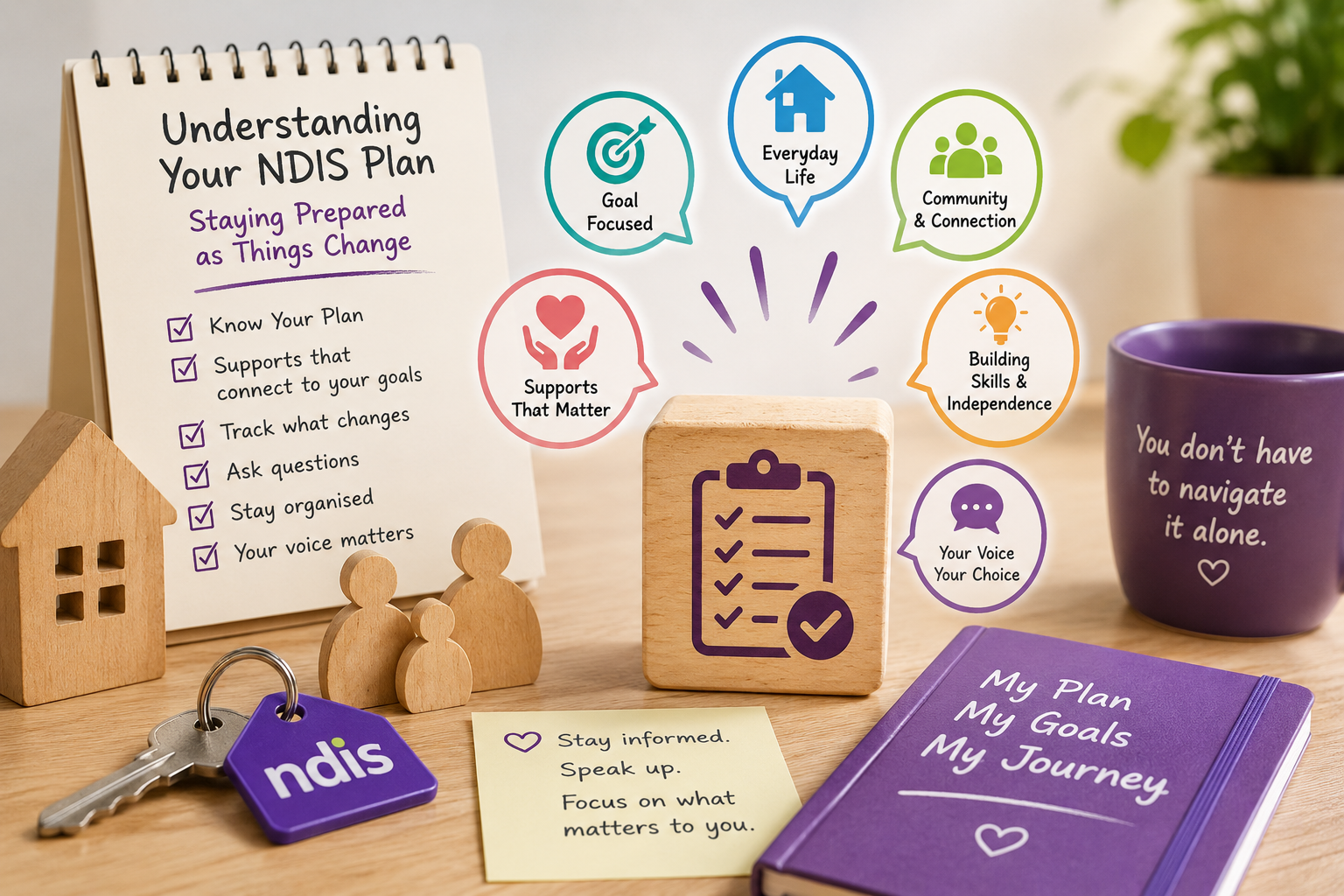
[A visual representation of understanding an NDIS plan featuring a personalised planning checklist, goal and support icons, a central plan symbol, and everyday life elements, illustrating the importance of staying informed, understanding your supports, tracking changes, asking questions, and keeping your NDIS plan connected to your goals and needs.]
The NDIS continues to evolve.
For participants, that can sometimes mean hearing new terms, learning about different processes and wondering what a change might mean for their supports.
It can feel overwhelming.
But staying informed doesn't mean you need to understand every policy update or piece of NDIS legislation.
It starts with something much simpler:
Understanding your plan, your supports and what matters to you.
Your circumstances can change. Your goals can change. Your support needs can change.
Your understanding of your plan should be able to change with you.
Start With the Basics: Know Your Plan
Your NDIS plan is designed to help you access reasonable and necessary supports related to your disability and work towards your goals.
But how often do you stop and look at what your plan is helping you achieve?
It can be useful to ask yourself:
What are my current goals?
What supports am I using?
How are those supports helping me?
Are there supports in my plan that I'm not using?
Have my circumstances changed?
Are my current supports still appropriate for my needs?
You don't need to wait until something goes wrong to ask these questions.
Regularly checking in can help you feel more confident about how your supports are working for you and whether they continue to reflect your circumstances.
Your Plan Should Connect to Your Life
An NDIS plan isn't just about funding.
Behind every plan is a person, a life and a set of goals.
Your supports might help you:
become more independent
participate in your community
work or study
manage everyday activities
build relationships
develop new skills
stay connected to the people and places that matter to you.
The important question isn't simply: "What funding do I have?"
It's also:
"What is this support helping me do?"
Understanding that connection can make it easier to explain your support needs and make informed decisions about your services.
Keep Track of What Changes
Life doesn't stay the same.
You might move house, start or finish work, begin studying, become more independent, experience changes in your support needs or start working towards a new goal.
Even changes that seem small can affect the support you need.
Keeping a simple record of important changes can help you communicate your circumstances when you need to.
You might keep notes about:
What's working?
What's changed?
What isn't working?
What would make things easier?
What are you working towards?
You don't need a complicated system. Sometimes a simple running note is enough.
Understand the People Supporting You
Many participants have several people involved in their support.
You might have Support Workers, Support Coordinators, therapists, Behaviour Support Practitioners, Plan Managers, family members, carers or other professionals involved.
Each person may have a different role.
Understanding who does what can make it easier to know who to speak to when you have a question or concern.
It can also help make sure everyone is working towards the same goals.
Good support isn't just about having lots of people involved.
It's about having the right people, the right communication and the right support around you.
Don't Be Afraid to Ask Questions
For example:
What am I being charged for?
What does this service include?
How does this support relate to my goals?
How much funding have I used?
What funding do I have remaining?
Can my provider explain this invoice?
What happens if my circumstances change?
Who should I speak to if something isn't working?
There is no such thing as a silly question when it comes to understanding your own supports.
If something doesn't make sense, ask.
Being informed can help you exercise choice and control over your supports.
Stay Organised
Keeping important information together can make NDIS planning much easier.
Depending on your circumstances, this might include:
your current NDIS plan
service agreements
invoices and payment records
reports and assessments
progress updates
important emails
records of changes in your circumstances
information about your goals and support needs.
You don't need to keep everything in a complicated filing system.
The goal is simply to know where your important information is when you need it.
What About Changes to the NDIS?
The NDIS is continuing to develop changes to the way participants' plans are created and managed.
The new approach, known as new framework planning, is intended to make planning fairer, easier to navigate and more focused on a participant's disability-related support needs and goals.
One part of the new approach will be a support needs assessment.
The NDIS describes this as a guided conversation with a trained assessor to understand a participant's disability support needs. The information gathered will help inform a participant's budget under the new planning approach.
The new planning approach is being introduced gradually. The NDIS currently says rollout is expected to begin from April 2027, with participants moving to the new approach over time. Current NDIS plans and supports remain in place until a participant moves to the new planning approach.
This means you don't need to panic every time you hear about an NDIS change.
Instead:
Stay informed. Check official information. Keep track of your circumstances. And ask for help when you're unsure about what a change means for you.
The NDIS is also testing the new planning process with participants to help identify what works and what needs to improve before broader rollout.
For the latest information, it's always best to check updates directly from the NDIS rather than relying on social media posts or outdated information.
Your Voice Matters
One of the most important parts of understanding your NDIS plan is understanding that you have a voice in your supports.
Your experiences matter.
Your goals matter.
Your preferences matter.
And your understanding of what works for you matters.
The NDIS has been working with people with disability, families, carers and the broader disability community as it develops and tests changes to the planning process.
Participant input is important because good planning should be about more than creating a budget.
It should help connect the right supports to the life you want to live.
You Don't Have to Navigate It Alone
Understanding the NDIS can sometimes feel like a full-time job.
You don't have to know everything.
If you're unsure about your plan, your supports or changes to the NDIS, you can speak with your planner, Local Area Coordinator or my NDIS Contact.
The NDIS also recommends speaking with your Support Coordinator or Plan Manager if you need help understanding changes or managing your supports.
A Support Coordinator can help you understand your options, connect with providers, coordinate your support team and work through questions or concerns about your supports.
The goal isn't to make decisions for you.
It's to help you feel informed and confident enough to make your own decisions.
Staying Prepared Doesn't Mean Expecting the Worst
The NDIS will continue to evolve.
Your life will continue to evolve too.
The best thing you can do is stay connected to your goals, understand your supports and speak up when something isn't working.
You don't need to have all the answers.
You just need to know that your voice belongs in the conversation.
At Nolastray Support, we believe good Support Coordination starts with listening.
We work alongside our Legends to understand what matters to them, connect the right people and help create support arrangements that make sense for their lives.
Because your NDIS plan is more than funding.
It's part of your journey; and you should feel confident about where it's taking you. 💙
Frequently Asked Questions:
-
No. You can regularly reflect on your goals, support needs and how your current supports are working. You don't have to wait until a formal planning conversation to raise questions or concerns.
-
Keep a record of what has changed and how it affects your support needs. Depending on the circumstances, you may need to speak with the NDIS or your support team about what to do next.
-
Absolutely. You should feel comfortable asking your provider to explain the services you're receiving and what you're being charged for.
-
A support needs assessment will form part of the NDIS's new way of planning. It is designed as a guided conversation with a trained assessor about a participant's disability-related support needs. The information gathered will help inform the participant's budget under the new planning approach.
-
Not necessarily. The NDIS says current plans and supports will remain in place until participants move to the new planning approach. The rollout is expected to begin from April 2027 and will happen gradually, with participants receiving information before changes affect them.
-
You can speak with your planner, Local Area Coordinator or my NDIS Contact. Depending on what you need help with, you can also speak with your Support Coordinator or Plan Manager.
-
For the most current information, check the official NDIS website and information provided directly to you by the NDIS. NDIS changes can take time to implement, so older articles and social media posts may not reflect the latest position.
Read other related blog posts: